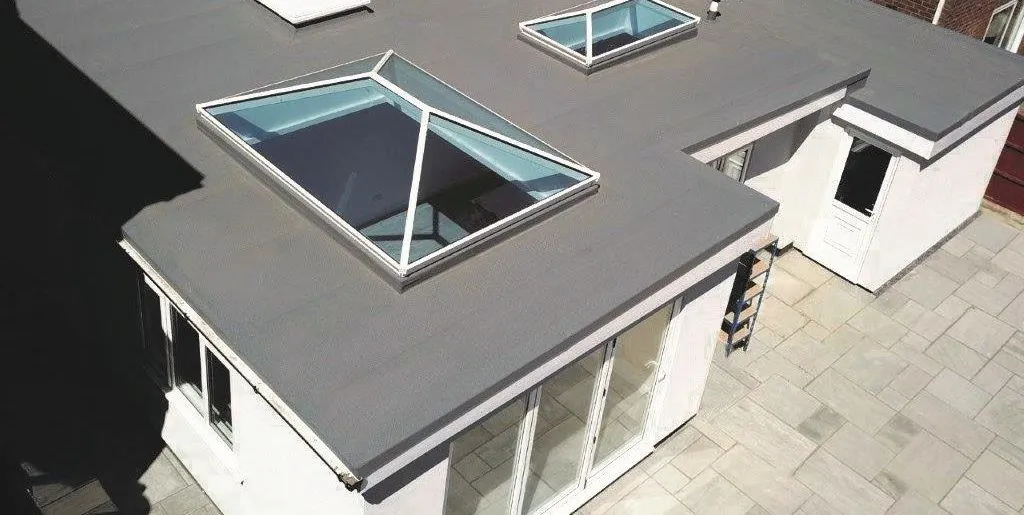
Do I need planning permission to re-roof or have work carried out on an existing roof?

June 7, 2025
"Building regulations and planning permission – two terms that can make any homeowner worry."

What’s needed when replacing a flat roof?

It’s unlikely that you will have to apply for planning permission if you are re-roofing your property. The same is true if you have decided to add skylights or roof lights. Current permitted development rules may allow you to alter your roof as long as they fall within certain limits and conditions.

Please note that these apply to houses, not flats, maisonettes or other buildings:

  • Alterations must not be any higher than the highest part of the existing roof.
  • Any alteration made must not project more than 150mm from the property’s existing roof plane.
  • Windows that are side-facing must be obscure glazed. Any opening must be 1.7m above the floor.
  • Solar panels have different limits on projections and regulations may differ depending on protected areas. It’s important to understand the planning and building regulations regarding solar panels before any work commences.

For more detailed information on permitted development rights for householders, you can check the Government’s technical guidance on the Planning Portal.

Planning for different types of flat roofing projects

When planning a flat roofing project, whether for your home or your business, there is a lot to consider. The type of roof and its purpose will influence everything from the materials you choose to the permissions you need.

Domestic flat roofing projects

For homeowners, flat roofs are often found on extensions, garages or even as part of the main house structure. When you are looking to repair or replace a flat roof on a domestic property, here are some key things to think about:

Materials: There are several popular choices for domestic flat roofs.

  • Single Ply Membranes are flexible, lightweight membranes that provide excellent waterproofing, UV resistance and longevity. At High Tech Membrane Roofing, we are registered installers of leading systems including Sika Sarnafil, Danosa, Bauder, and our preferred option for homeowners—the unique Anti Slip PVC Protan Single-Ply Flat Roofing System, which offers superior performance and safety.
  • Felt roofs (also known as “built up roofing” or BUR) involve layers of felt bonded with bitumen. Modern systems are far more reliable than older versions.
  • EPDM (Ethylene Propylene Diene Monomer), or rubber roofing, is a durable, flexible single-sheet membrane that resists cracking.
  • GRP (Glass Reinforced Plastic) or fibreglass, is a multi-layer system made by applying a liquid resin over a reinforcement matting, followed by a durable topcoat. Once cured, it forms a seamless, rigid and long-lasting waterproof surface, which is ideal for flat roofs.
  • Liquid applied membranes offer seamless, flexible waterproofing for complex shapes and are painted directly onto the surface.

When considering a flat roof, you might also wonder about its longevity. For a deeper dive into the expected lifespan of various flat roof materials, check out our article How Long Do Flat Roof Extensions Last?

Insulation: Improving insulation is often a legal requirement when replacing a flat roof. For domestic roofs, you must meet a U-value of 0.18 W/m²K under Approved Document L for England. This usually means adding significant insulation to make your home more energy efficient and comfortable.

Drainage: Flat roofs always have a slight slope to allow rainwater to drain away. Proper drainage design is vital to prevent pooling, leaks, and long-term damage.

Commercial flat roofing projects

Commercial flat roofs are often much larger and may need to support heavy equipment or function as accessible spaces like terraces.

Materials: Similar to domestic roofs, but often used in larger rolls or to commercial-grade specs:

  • Modified Bitumen Roofing: An evolution of felt roofing, using polymers for greater flexibility and durability.
  • Single Ply Membranes: TPO (Thermoplastic Olefin) and PVC are both popular for their flexibility, UV resistance, and energy efficiency.
  • Built Up Roofing (BUR): Multiple felt layers with tar or asphalt for durability and fire resistance.
  • Green Roofs: Vegetation-covered roofs that improve insulation, reduce stormwater runoff, and enhance air quality. These require structural assessments and specialist waterproofing.

Structural Considerations: Commercial roofs may bear heavier loads. A structural engineer can confirm whether your roof can support equipment and foot traffic.

Access and Safety: Maintenance access is essential—this might include ladders, walkways, or railings. Fire safety regulations are also stricter for commercial settings.

Planning Permission for Commercial Projects: Minor repairs may not require planning permission, but larger alterations or new flat roof builds almost certainly will—especially if they affect appearance, height, or usage. Check with your local authority early in the process.

Bats

Bats are a protected species in the UK. If your roof or loft is home to bats, you may need a survey and even a licence before carrying out any work.

For more information, visit Natural England’s guidance on bat protection.

Building regulations

You generally won’t need to inform LABC if you’re re-covering or fixing less than 25% of your roof. However, you will need building regulations approval if:

  • You’re replacing or repairing more than 25% of the roof
  • You’re using different materials that affect structural or fire performance
  • You’re making structural changes

Garages and unheated outbuildings are often exceptions.

So, if you’re replacing your flat roof, you’ll likely need to inform Building Control and upgrade insulation to meet standards. This ensures you receive the correct LABC certificate—a must-have if you plan to sell your home in future.

Why choose High Tech Membrane Roofing?

We’re part of the Competent Roofer scheme, approved by the Government. Our professional team ensures that your roof complies with all building regulations, with correct certification and documentation provided upon completion.

When you choose High Tech Membrane Roofing, you get expert craftsmanship, a strong lifetime guarantee, and great customer service from start to finish.

Visit our Services page or get in touch with our team today to discuss your flat roof project.


Sources:

Steve Thornton – Author

If you have a question about this or any of our blogs, or about any of our services, then please do not hesitate to get in touch.

We will always try and answer your question quickly and professionally.

High-Tech Membrane Roofing Ltd’s Accreditations

What is the best skylight for a flat roof?

What is the best skylight for a flat roof?

Are you wondering what is the best skylight for a flat roof? You may be designing your dream home; planning an extension; already have a flat roof but wish the room was brighter. With a skylight, your home will be flooded with natural light. But the question is: ‘what is the best skylight for a flat roof?’